
Franz Beckenbauer vs Dino Zoff: Stats Compared
Sweeper / Centre-Back, Germany (born 1945, retired 1983) · Goalkeeper, Italy (born 1942, retired 1983)
Comparing Franz Beckenbauer with Dino Zoff means weighing two very different kinds of greatness. They belonged to different eras, which makes any direct comparison a test of imagination as much as statistics. The raw numbers read 81 goals in 776 outings for Franz Beckenbauer (0.10/game), versus 0 in 734 for Dino Zoff (0.00/game). Assists were never formally recorded across most of their eras, so the playmaking dimension has to be judged on reputation and highlights rather than hard totals. Trophy counts give Franz Beckenbauer 16 and Dino Zoff 9, with 1× FIFA World Cup (1974) and 1× FIFA World Cup (1982) the standout honours respectively. Franz Beckenbauer belonged to the 1970s, dominating with a rugged quality; Dino Zoff rose in the 1980s with a brave edge. Their routes to the top were distinct: Franz Beckenbauer built his reputation across Bayern Munich, Hamburg, New York Cosmos, peaking around 1974, while Dino Zoff reached his defining level around 1982 after spells with Udinese, Mantova, Napoli, Juventus. Picking between them says as much about the picker as the players.
176 words · comparison angle: era
Player profiles
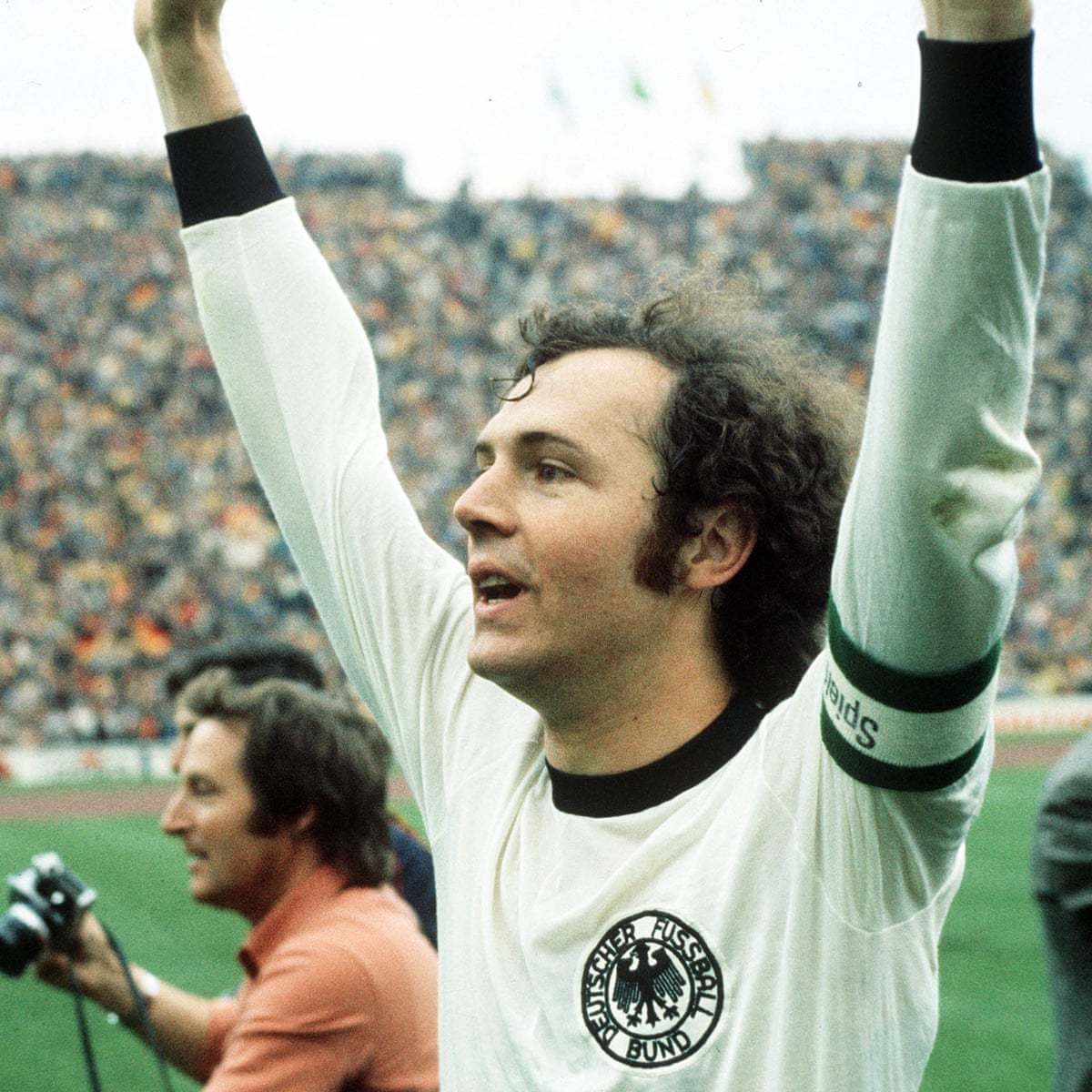
German defender who revolutionised the sweeper role; the only man to win the World Cup as both captain (1974) and manager (1990).
“A graceful attacking sweeper who reinvented the libero role with composure and peerless reading of the game.”
Dino Zoff is an Italian former professional footballer who played as a goalkeeper. Regarded as one of the greatest goalkeepers of all time, he is the oldest ever winner of the World Cup, which he lifted as captain of the Italy national team in the 1982 tournament, at the age of 40 years, 4 months and 13 days. He also won the award for best goalkeeper of the tournament and was elected to the team of the tournament for his performances, keeping two clean-sheets, an honour he also received after winning the 1968 European Championship on home soil.
“A master of positioning and composure whose longevity made him an Italian institution.”
Head-to-head stats
Career goals by season
Representative career seasons — goals per season for each player across their documented clubs.
Attribute radar
Attribute ratings are peak-era, 0–100. Different positions naturally skew the profile.
Attribute comparison
Trophy breakdown
- 1× FIFA World Cup (1974)
- 1× UEFA European Championship (1972)
- 3× European Cup (1974, 1975, 1976)
- 5× Bundesliga (1969, 1972, 1973, 1974, 1982)
- 4× DFB-Pokal
- 1× UEFA Cup Winners' Cup (1967)
- 1× Intercontinental Cup (1976)
- 1× FIFA World Cup (1982)
Trophy distribution
Career milestones
- 1964 Bayern Munich senior debut
- 1966 Won the DFB-Pokal, his first major trophy
- 1972 Euro winner with West Germany
- 1974 World Cup winner as captain in Munich
- 1976 Third consecutive European Cup with Bayern
- 1977 Joined New York Cosmos
- 1983 Came out of retirement to play for Hamburg
- 1974 Established himself at Udinese
- 1978 Reached his defining peak
- 1982 Delivered a landmark season
- 1983 Retired from professional football
The verdict
The numbers give Franz Beckenbauer the lead — a decisive margin, courtesy of a sharper goalscoring record.
Franz Beckenbauer edges it (a decisive margin)