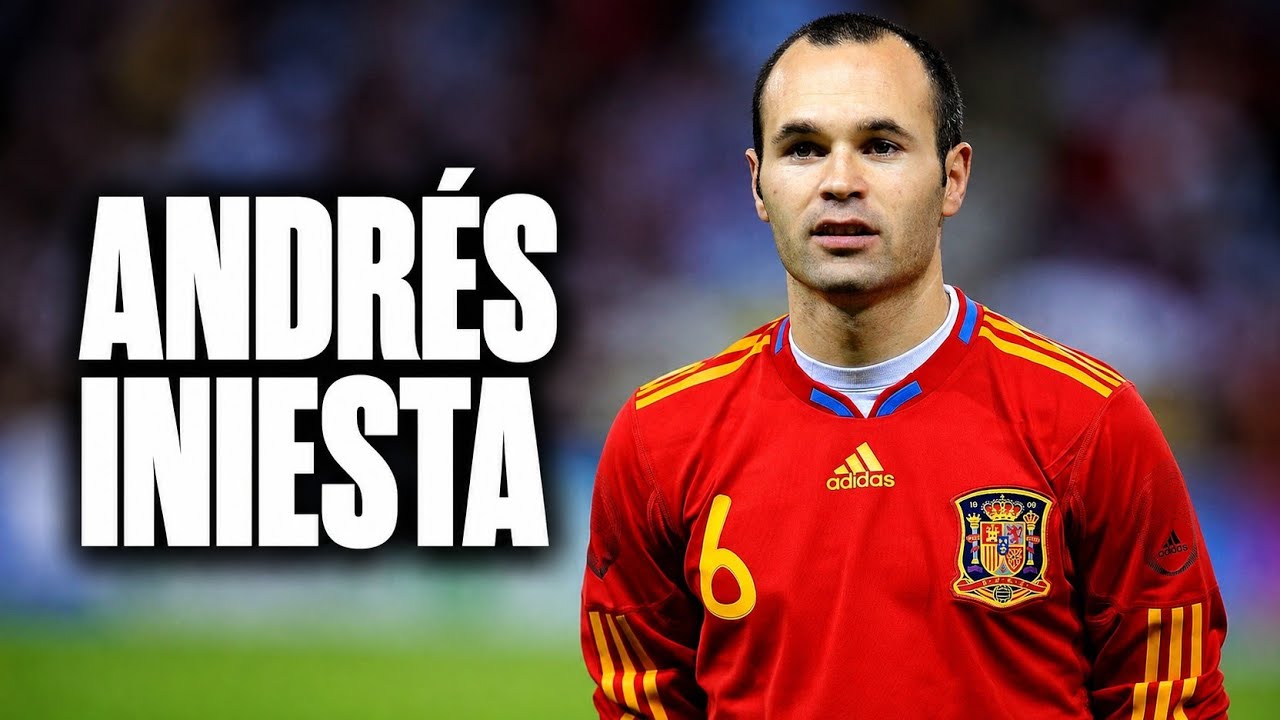
Andrés Iniesta vs Andriy Shevchenko: Stats Compared
Central / Attacking Midfielder, Spain (born 1984, retired 2023) · Striker, Ukraine (born 1976, retired 2012)
There is something timeless about weighing Andrés Iniesta against Andriy Shevchenko. Their textures on the ball are what fans actually remember, and they could hardly be more different. Across his senior career Andrés Iniesta notched 88 goals in 945 appearances (0.09 per game), while Andriy Shevchenko recorded 369 in 803 (0.46 per game). Modern assist data only covers part of their careers, so creativity is hard to compare cleanly — Andrés Iniesta is listed at 200 and Andriy Shevchenko at 0 where figures survive. Andrés Iniesta departs the game with 25 major pieces of silverware, including 1× FIFA World Cup (2010); Andriy Shevchenko with 9, including 1× UEFA Champions League (2003). Stylistically Andrés Iniesta was incisive where Andriy Shevchenko was ruthless — two vocabularies of the same sport. Club journeys add another layer, with Andrés Iniesta reaching his representative peak around 2012 across Barcelona, Vissel Kobe, Emirates and Andriy Shevchenko doing so around 2003 with Dynamo Kyiv, AC Milan, Chelsea. Whichever side you land on, both belong in any conversation about the finest of their generation.
176 words · comparison angle: style
Player profiles
Spanish midfielder who scored the winning goal in the 2010 World Cup final; nine-time La Liga winner and four-time Champions League winner with Barcelona.
“A balletic dribbler with immaculate balance, body feints and an unerring habit of scoring in finals.”
Ukrainian striker and Dynamo Kyiv legend, Champions League winner with AC Milan in 2003; Ballon d'Or winner in 2004.
“A clinical, explosive striker with pace, finishing and an eye for European nights.”
Head-to-head stats
Career goals by season
Representative career seasons — goals per season for each player across their documented clubs.
Attribute radar
Attribute ratings are peak-era, 0–100. Different positions naturally skew the profile.
Attribute comparison
Trophy breakdown
- 1× FIFA World Cup (2010)
- 2× UEFA European Championship (2008, 2012)
- 4× UEFA Champions League (2006, 2009, 2011, 2015)
- 9× La Liga
- 6× Copa del Rey
- 3× FIFA Club World Cup
- 1× UEFA Champions League (2003)
- 1× Serie A (2004)
- 1× UEFA Super Cup (2003)
- 5× Ukrainian Premier League
- 1× Ukrainian Cup
Trophy distribution
Career milestones
- 2002 Barcelona debut
- 2006 Champions League winner in Paris
- 2008 Euro winner with Spain
- 2009 Treble winner under Pep Guardiola
- 2012 Named Player of the Tournament at Euro 2012
- 2015 Won his fourth Champions League in his final Barça season
- 2018 Joined Vissel Kobe in Japan
- 1994 Dynamo Kyiv debut
- 1997 Hat-trick in the Champions League against Barcelona
- 1999 Signed for AC Milan
- 2003 Champions League winner, scored in the final on penalties
- 2004 Ballon d'Or winner
- 2006 Joined Chelsea in an unsuccessful spell
- 2009 Returned to Dynamo Kyiv
The verdict
If forced to pick, Andrés Iniesta is the choice: a decisive margin, with a weightier trophy cabinet the deciding factor.
Andrés Iniesta edges it (a decisive margin)