Diego Maradona vs Alfredo Di Stéfano: Stats Compared
Forward / Playmaker, Argentina (born 1960, retired 1997) · Forward, Argentina (born 1926, retired 1966)
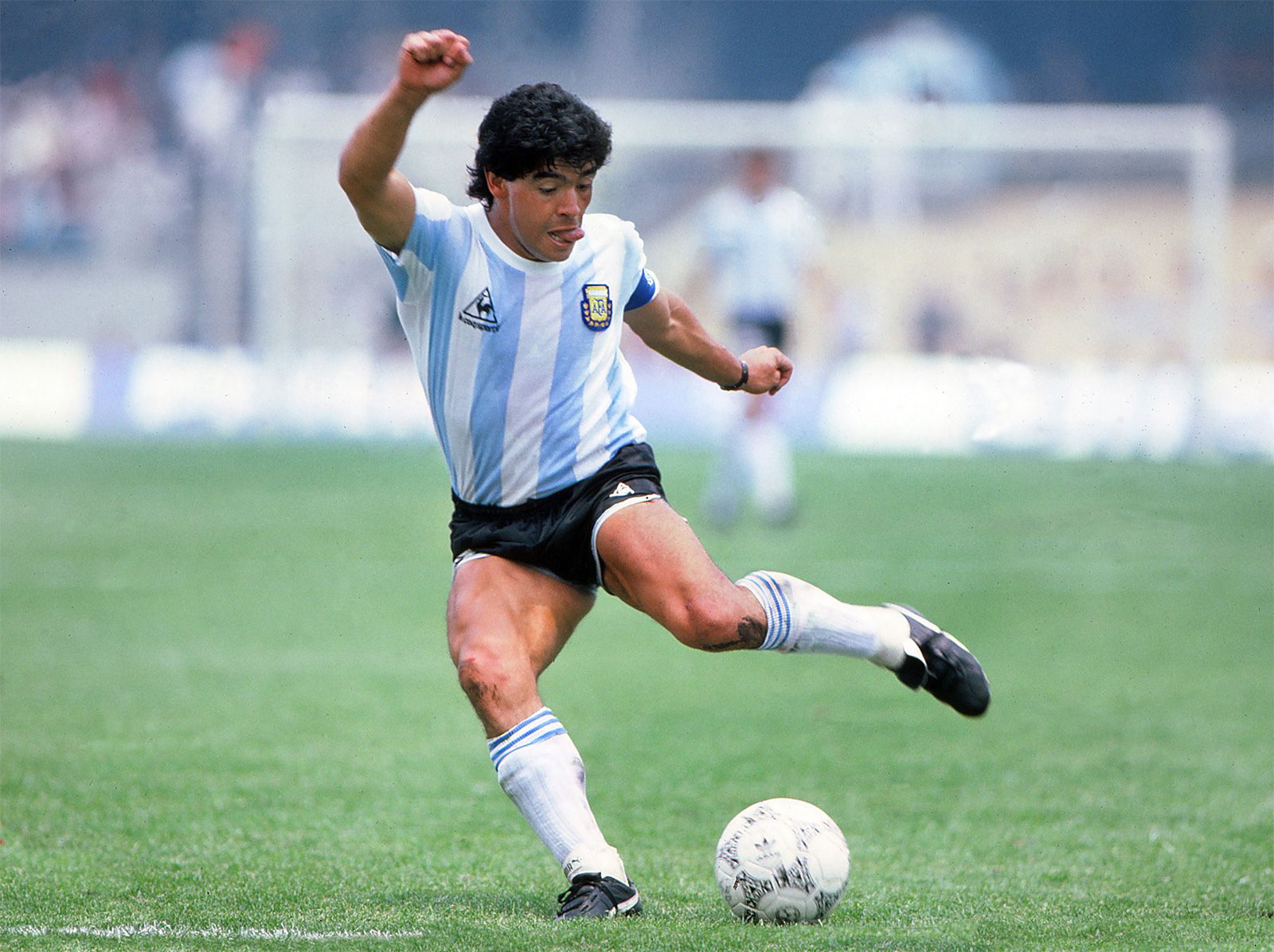
Ask any fan to rank Diego Maradona above or below Alfredo Di Stéfano and you will get a passionate answer. Position shapes everything in football, and these two fulfilled very different briefs. On production alone, Diego Maradona posted 293 goals across 582 appearances while Alfredo Di Stéfano managed 511 across 698. Because assists were not systematically tracked for much of their time, that side of the comparison rests on the footage that survives. Diego Maradona departs the game with 6 major pieces of silverware, including 1× FIFA World Cup (1986); Alfredo Di Stéfano with 15, including 5× European Cup (1956, 1957, 1958, 1959, 1960). As a forward / playmaker Diego Maradona bent the role to a mercurial template; as a forward, Alfredo Di Stéfano redefined it with clinical authority. Context beyond the headline totals is important: Diego Maradona's landmark level arrived around 1986 with a career spanning Argentinos Juniors, Boca Juniors, Barcelona, Napoli, Sevilla, Newell's Old Boys; Alfredo Di Stéfano's came around 1958 across River Plate, Millonarios, Real Madrid, Espanyol. Whichever side you land on, both belong in any conversation about the finest of their generation.
186 words · comparison angle: role
Player profiles
Argentine legend who almost single-handedly led Argentina to the 1986 World Cup and transformed Napoli into Italian and European contenders.
“A low-centre-of-gravity left-footed genius whose dribbling and playmaking carried teams single-handedly.”
Real Madrid legend and key figure of their five-consecutive European Cups; defined the modern total footballer role.
“An omnipresent forward who dropped deep to construct attacks before arriving in the box to finish them.”
Head-to-head stats
Career goals by season
Representative career seasons — goals per season for each player across their documented clubs.
Attribute radar
Attribute ratings are peak-era, 0–100. Different positions naturally skew the profile.
Attribute comparison
Trophy breakdown
- 1× FIFA World Cup (1986)
- 1× UEFA Cup (1989)
- 2× Serie A (1987, 1990)
- 1× Copa Italia (1987)
- 1× Argentine Primera División (1981)
- 5× European Cup (1956, 1957, 1958, 1959, 1960)
- 1× Intercontinental Cup (1960)
- 8× La Liga
- 1× Copa América (1947)
Trophy distribution
Career milestones
- 1976 Argentinos Juniors debut ten days before his 16th birthday
- 1981 Joined Boca Juniors and won the Argentine league
- 1982 World-record transfer to Barcelona
- 1984 Signed for Napoli for another world-record fee
- 1987 Led Napoli to their first ever Serie A title
- 1990 Captained Argentina to a second consecutive World Cup final
- 1997 Played his final professional matches at Boca Juniors
- 1945 River Plate debut
- 1947 Copa América winner with Argentina
- 1949 Moved to Millonarios in Colombia
- 1953 Signed for Real Madrid after a contested transfer
- 1956 First of five consecutive European Cups
- 1959 Won the first Ballon d'Or (Super Ballon d'Or) honoured later
- 1964 Left Real Madrid for Espanyol
The verdict
Reasonable people will disagree, but Alfredo Di Stéfano wins out by a decisive margin on the weight of a sharper goalscoring record.
Alfredo Di Stéfano edges it (a decisive margin)