Diego Maradona vs Elías Figueroa: Stats Compared
Forward / Playmaker, Argentina (born 1960, retired 1997) · Centre-Back, Chile (born 1946, retired 1982)
Few debates split football fans quite like Diego Maradona versus Elías Figueroa. Legacy is the only real measure that outlives the numbers, and both have staked towering claims. Career output puts Diego Maradona at 293 goals in 582 games, with Elías Figueroa at 40 in 600. Assists were never formally recorded across most of their eras, so the playmaking dimension has to be judged on reputation and highlights rather than hard totals. The honours ledger favours Diego Maradona with 6 major trophies (1× FIFA World Cup (1986)) against Elías Figueroa's 5 (2× Uruguayan Primera División (1967, 1968)). History will file Diego Maradona under explosive greatness and Elías Figueroa under anticipatory greatness — different shelves, same temple. Club journeys add another layer, with Diego Maradona reaching his representative peak around 1986 across Argentinos Juniors, Boca Juniors, Barcelona, Napoli, Sevilla, Newell's Old Boys and Elías Figueroa doing so around 1974 with Santiago Wanderers, Peñarol, Internacional, Palestino, Fort Lauderdale Strikers. Arguments will run and run, which is exactly why the matchup endures.
169 words · comparison angle: legacy
Player profiles
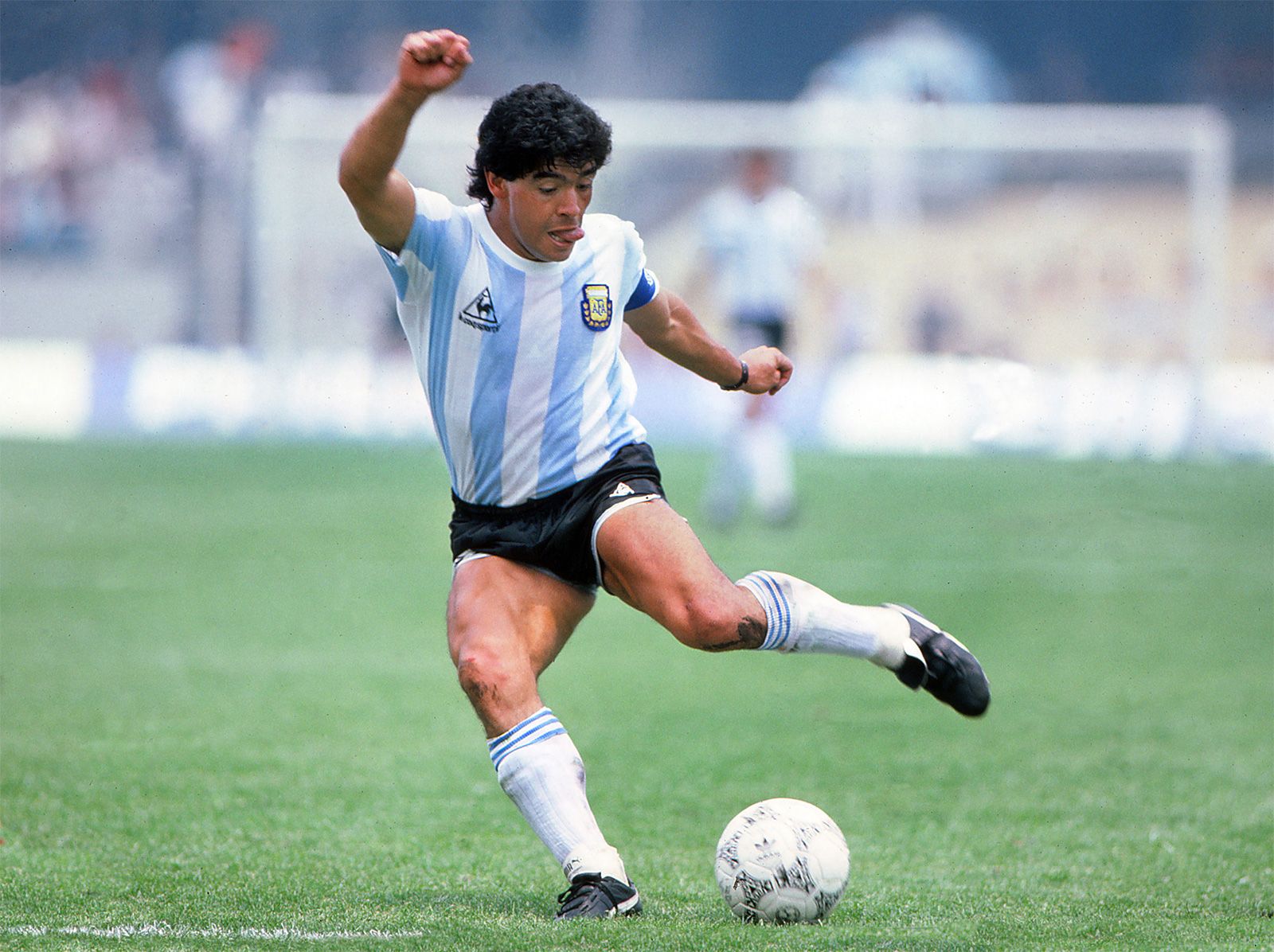
Argentine legend who almost single-handedly led Argentina to the 1986 World Cup and transformed Napoli into Italian and European contenders.
“A low-centre-of-gravity left-footed genius whose dribbling and playmaking carried teams single-handedly.”
A three-time South American Footballer of the Year, Figueroa is widely considered the finest defender the continent has produced, marshalling Internacional's dominant 1970s side.
“An imperious, elegant centre-back who combined aerial dominance with composed distribution well ahead of his era.”
Head-to-head stats
Career goals by season
Representative career seasons — goals per season for each player across their documented clubs.
Attribute radar
Attribute ratings are peak-era, 0–100. Different positions naturally skew the profile.
Attribute comparison
Trophy breakdown
- 1× FIFA World Cup (1986)
- 1× UEFA Cup (1989)
- 2× Serie A (1987, 1990)
- 1× Copa Italia (1987)
- 1× Argentine Primera División (1981)
- 2× Uruguayan Primera División (1967, 1968)
- 3× Campeonato Gaúcho (1973, 1974, 1975)
Trophy distribution
Career milestones
- 1976 Argentinos Juniors debut ten days before his 16th birthday
- 1981 Joined Boca Juniors and won the Argentine league
- 1982 World-record transfer to Barcelona
- 1984 Signed for Napoli for another world-record fee
- 1987 Led Napoli to their first ever Serie A title
- 1990 Captained Argentina to a second consecutive World Cup final
- 1997 Played his final professional matches at Boca Juniors
- 1965 Professional debut for Santiago Wanderers
- 1967 Won Uruguayan Primera División with Peñarol
- 1973 Won Campeonato Gaúcho with Internacional
- 1974 Reached the peak of his powers at Internacional
- 1982 Retired after a final spell at Fort Lauderdale Strikers
- Finished his career with 40 goals in 600 appearances and 5 major honours. Finished his career with 40 goals in 600 appearances and 5 major honours.
The verdict
The numbers give Diego Maradona the lead — a decisive margin, courtesy of a sharper goalscoring record.
Diego Maradona edges it (a decisive margin)