Diego Maradona vs Steven Gerrard: Stats Compared
Forward / Playmaker, Argentina (born 1960, retired 1997) · Central Midfielder, England (born 1980, retired 2016)
Diego Maradona versus Steven Gerrard is a clash of two unmistakable footballing identities. They belonged to different eras, which makes any direct comparison a test of imagination as much as statistics. The raw numbers read 293 goals in 582 outings for Diego Maradona (0.50/game), versus 212 in 860 for Steven Gerrard (0.25/game). Modern assist data only covers part of their careers, so creativity is hard to compare cleanly — Diego Maradona is listed at 0 and Steven Gerrard at 155 where figures survive. Trophy counts give Diego Maradona 6 and Steven Gerrard 8, with 1× FIFA World Cup (1986) and 1× UEFA Champions League (2005) the standout honours respectively. Diego Maradona belonged to the 1980s, dominating with a ruthless quality; Steven Gerrard rose in the turn of the millennium with a intelligent edge. Club journeys add another layer, with Diego Maradona reaching his representative peak around 1986 across Argentinos Juniors, Boca Juniors, Barcelona, Napoli, Sevilla, Newell's Old Boys and Steven Gerrard doing so around 2005 with Liverpool, LA Galaxy. The honest conclusion is that comparison enriches appreciation rather than crowns a single winner.
183 words · comparison angle: era
Player profiles
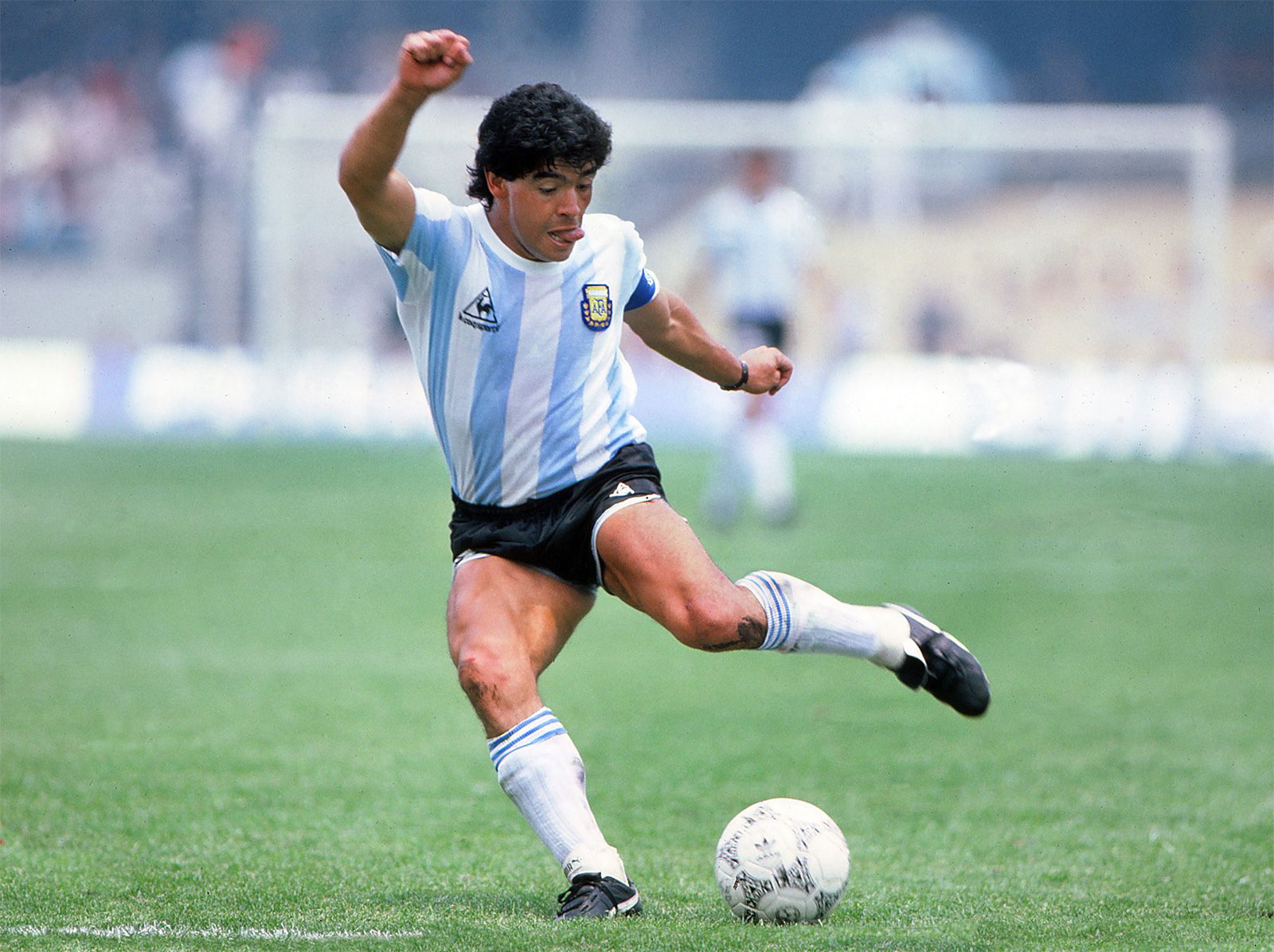
Argentine legend who almost single-handedly led Argentina to the 1986 World Cup and transformed Napoli into Italian and European contenders.
“A low-centre-of-gravity left-footed genius whose dribbling and playmaking carried teams single-handedly.”
Liverpool captain who led the famous 2005 Champions League comeback in Istanbul; one-club man for most of his Premier League career.
“A dynamic box-to-box midfielder with a hammer of a right foot and a habit of dragging Liverpool back into games.”
Head-to-head stats
Career goals by season
Representative career seasons — goals per season for each player across their documented clubs.
Attribute radar
Attribute ratings are peak-era, 0–100. Different positions naturally skew the profile.
Attribute comparison
Trophy breakdown
- 1× FIFA World Cup (1986)
- 1× UEFA Cup (1989)
- 2× Serie A (1987, 1990)
- 1× Copa Italia (1987)
- 1× Argentine Primera División (1981)
- 1× UEFA Champions League (2005)
- 1× UEFA Cup (2001)
- 2× FA Cup (2001, 2006)
- 3× EFL Cup (2001, 2003, 2012)
- 1× UEFA Super Cup (2001)
Trophy distribution
Career milestones
- 1976 Argentinos Juniors debut ten days before his 16th birthday
- 1981 Joined Boca Juniors and won the Argentine league
- 1982 World-record transfer to Barcelona
- 1984 Signed for Napoli for another world-record fee
- 1987 Led Napoli to their first ever Serie A title
- 1990 Captained Argentina to a second consecutive World Cup final
- 1997 Played his final professional matches at Boca Juniors
- 1998 Liverpool debut
- 2001 Won the UEFA Cup, FA Cup and League Cup treble
- 2003 Replaced Sami Hyypiä as Liverpool captain
- 2005 Lifted the Champions League in Istanbul
- 2006 Player of the match in the FA Cup final
- 2012 Captained Great Britain at the Olympics
- 2015 Left Liverpool for LA Galaxy
The verdict
If forced to pick, Steven Gerrard is the choice: a clear margin, with superior creative output the deciding factor.
Steven Gerrard edges it (a clear margin)