
Diego Maradona vs Michael Laudrup: Stats Compared
Forward / Playmaker, Argentina (born 1960, retired 1997) · Attacking Midfielder, Denmark (born 1964, retired 1998)
Diego Maradona versus Michael Laudrup is a clash of two unmistakable footballing identities. Comparing across positions is never straightforward, and these two asked different questions of opponents. The raw numbers read 293 goals in 582 outings for Diego Maradona (0.50/game), versus 165 in 593 for Michael Laudrup (0.28/game). Assists were never formally recorded across most of their eras, so the playmaking dimension has to be judged on reputation and highlights rather than hard totals. In major honours Diego Maradona collected 6 — headlined by 1× FIFA World Cup (1986) — whereas Michael Laudrup amassed 9, led by 1× European Cup (1992). As a forward / playmaker Diego Maradona bent the role to a predatory template; as a attacking midfielder, Michael Laudrup redefined it with silky authority. The wider career context matters too: Diego Maradona peaked around 1986 after representing Argentinos Juniors, Boca Juniors, Barcelona, Napoli, Sevilla, Newell's Old Boys, while Michael Laudrup's defining level came around 1992 across Brøndby, Juventus, Barcelona, Real Madrid, Vissel Kobe. Few pairings invite such entrenched disagreement, and fewer still deserve it this much.
178 words · comparison angle: role
Player profiles
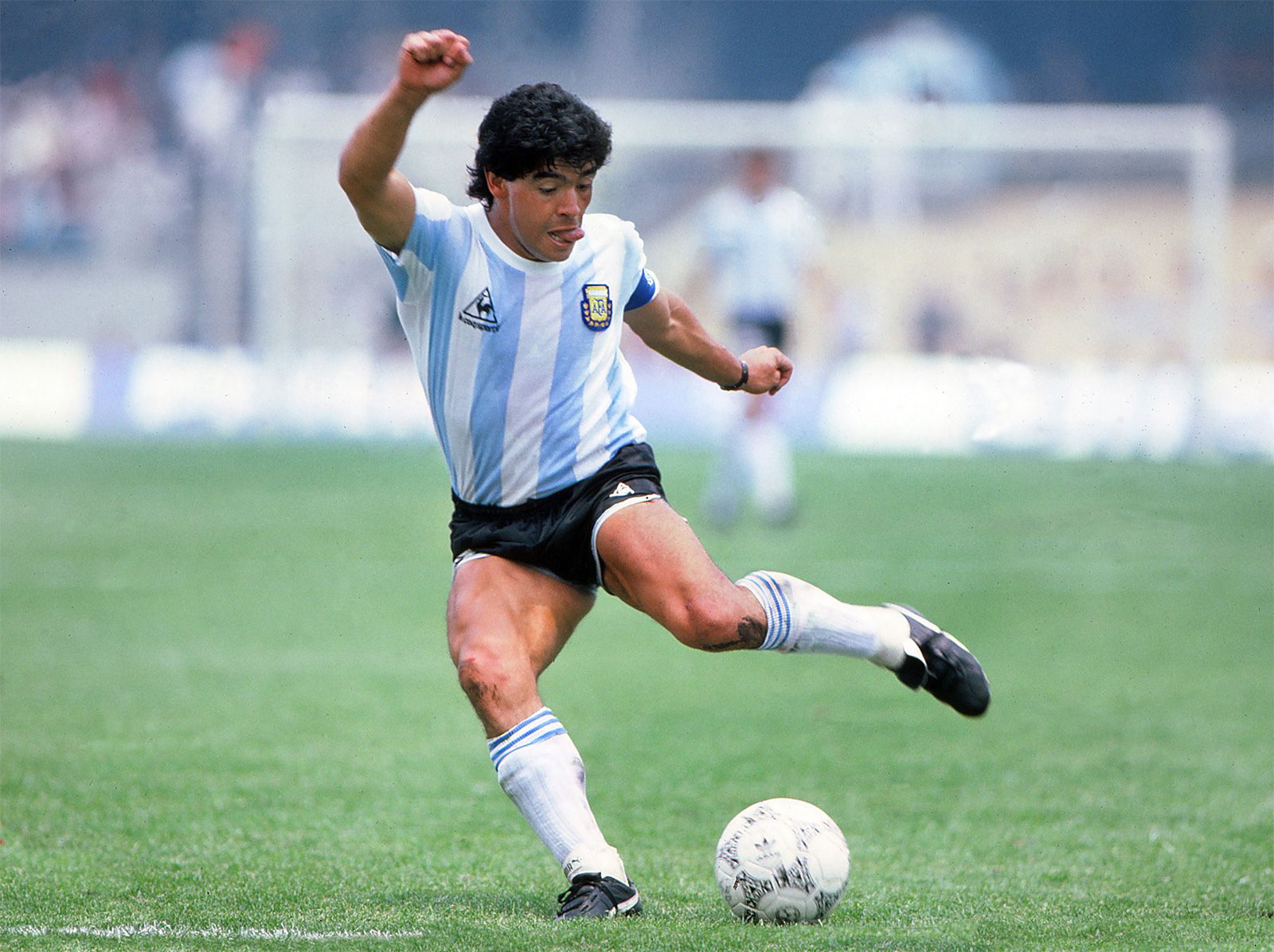
Argentine legend who almost single-handedly led Argentina to the 1986 World Cup and transformed Napoli into Italian and European contenders.
“A low-centre-of-gravity left-footed genius whose dribbling and playmaking carried teams single-handedly.”
Michael Laudrup is a Danish professional football coach and former player. Known for his playmaking and technical abilities, he is regarded as one of the greatest players of all time. He is the older brother of fellow retired footballer Brian Laudrup.
“A silk-smooth creator whose disguised passes opened space that others could not see.”
Head-to-head stats
Career goals by season
Representative career seasons — goals per season for each player across their documented clubs.
Attribute radar
Attribute ratings are peak-era, 0–100. Different positions naturally skew the profile.
Attribute comparison
Trophy breakdown
- 1× FIFA World Cup (1986)
- 1× UEFA Cup (1989)
- 2× Serie A (1987, 1990)
- 1× Copa Italia (1987)
- 1× Argentine Primera División (1981)
- 1× European Cup (1992)
Trophy distribution
Career milestones
- 1976 Argentinos Juniors debut ten days before his 16th birthday
- 1981 Joined Boca Juniors and won the Argentine league
- 1982 World-record transfer to Barcelona
- 1984 Signed for Napoli for another world-record fee
- 1987 Led Napoli to their first ever Serie A title
- 1990 Captained Argentina to a second consecutive World Cup final
- 1997 Played his final professional matches at Boca Juniors
- 1984 Established himself at Brøndby
- 1988 Reached his defining peak
- 1992 Delivered a landmark season
- 1998 Retired from professional football
The verdict
Weighing production, silverware and profile, the two finish within a whisker of each other. Call it a respectful draw — greatness of this calibre resists a single winner.
Too close to call — a respectful draw