
Diego Maradona vs Sócrates: Stats Compared
Forward / Playmaker, Argentina (born 1960, retired 1997) · Attacking Midfielder, Brazil (born 1954, retired 1989)
Diego Maradona and Sócrates represent two answers to the same question: how do you define a great? Silverware is the currency of legacy, and both players filled cabinets that few can rival. Across his senior career Diego Maradona notched 293 goals in 582 appearances (0.50 per game), while Sócrates recorded 258 in 594 (0.43 per game). Assists were never formally recorded across most of their eras, so the playmaking dimension has to be judged on reputation and highlights rather than hard totals. Diego Maradona departs the game with 6 major pieces of silverware, including 1× FIFA World Cup (1986); Sócrates with 8, including 3× Campeonato Brasileiro Série A. Diego Maradona built his medal haul through years of ruthless consistency, while Sócrates won his with incisive bursts of brilliance. Club journeys add another layer, with Diego Maradona reaching his representative peak around 1986 across Argentinos Juniors, Boca Juniors, Barcelona, Napoli, Sevilla, Newell's Old Boys and Sócrates doing so around 1982 with Botafogo-SP, Corinthians, Fiorentina, Flamengo. Few pairings invite such entrenched disagreement, and fewer still deserve it this much.
177 words · comparison angle: trophies
Player profiles
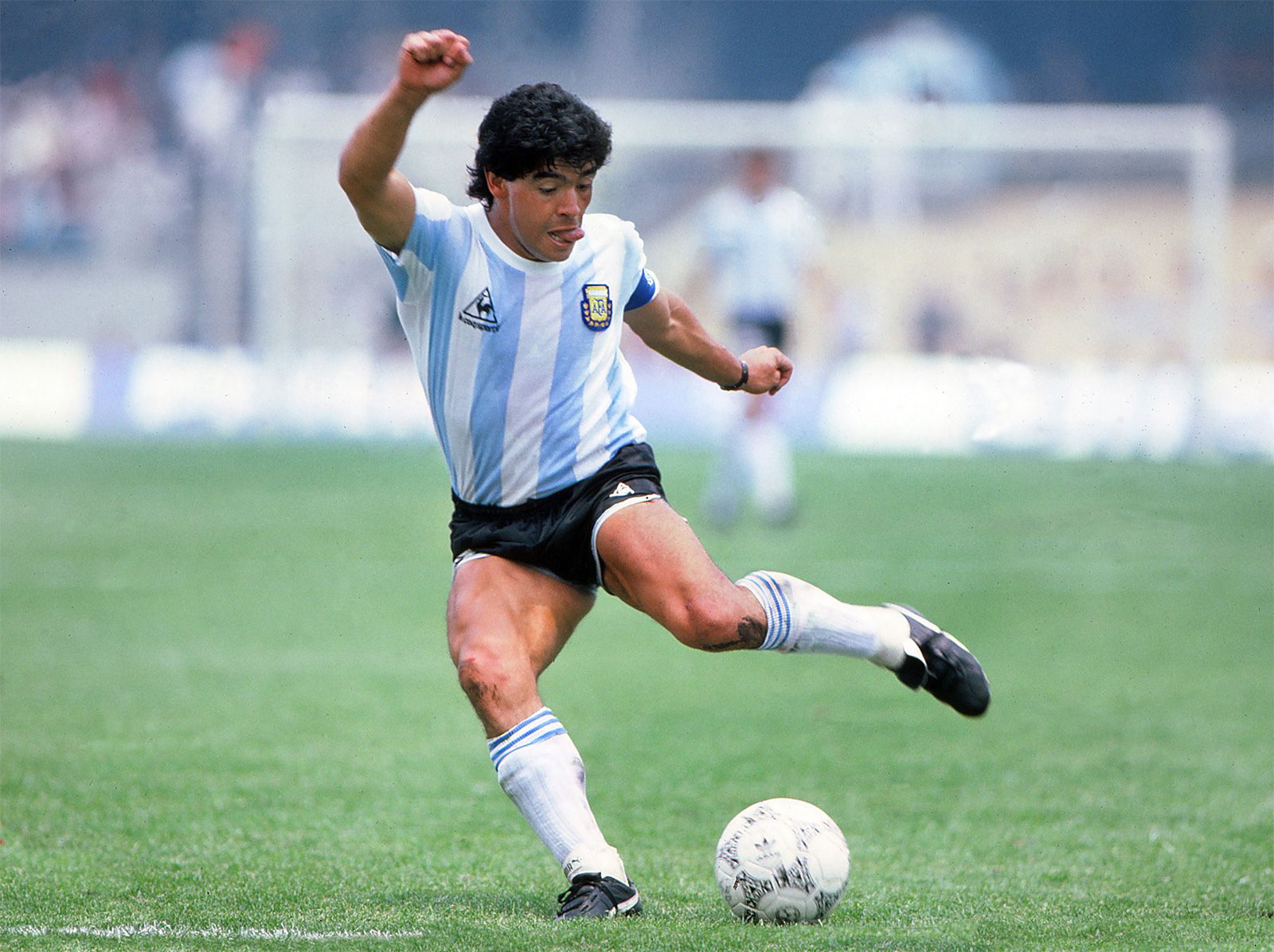
Argentine legend who almost single-handedly led Argentina to the 1986 World Cup and transformed Napoli into Italian and European contenders.
“A low-centre-of-gravity left-footed genius whose dribbling and playmaking carried teams single-handedly.”
Sócrates Brasileiro Sampaio de Souza Vieira de Oliveira (19 February 1954 – 4 December 2011), simply known as Sócrates, was a Brazilian footballer who played as a midfielder. His medical degree and his political awareness, combined with style and quality of his play, earned him the nickname "Doctor Socrates". Famous for his beard and the headband he wore during the 1986 World Cup in solidarity with victims of the Mexico City earthquake, Sócrates became the "symbol of cool for a whole generation of football supporters".
“A languid playmaker whose backheels, vision and civic conviction made him unforgettable.”
Head-to-head stats
Career goals by season
Representative career seasons — goals per season for each player across their documented clubs.
Attribute radar
Attribute ratings are peak-era, 0–100. Different positions naturally skew the profile.
Attribute comparison
Trophy breakdown
- 1× FIFA World Cup (1986)
- 1× UEFA Cup (1989)
- 2× Serie A (1987, 1990)
- 1× Copa Italia (1987)
- 1× Argentine Primera División (1981)
- 3× Campeonato Brasileiro Série A
Trophy distribution
Career milestones
- 1976 Argentinos Juniors debut ten days before his 16th birthday
- 1981 Joined Boca Juniors and won the Argentine league
- 1982 World-record transfer to Barcelona
- 1984 Signed for Napoli for another world-record fee
- 1987 Led Napoli to their first ever Serie A title
- 1990 Captained Argentina to a second consecutive World Cup final
- 1997 Played his final professional matches at Boca Juniors
- 1974 Established himself at Botafogo-SP
- 1978 Reached his defining peak
- 1982 Delivered a landmark season
- 1989 Retired from professional football
The verdict
On balance Diego Maradona edges the comparison. The margin is a narrow margin, decided mostly by a stronger all-round attribute profile.
Diego Maradona edges it (a narrow margin)