Romário vs Rivaldo: Stats Compared
Striker, Brazil (born 1966, retired 2009) · Attacking Midfielder / Forward, Brazil (born 1972, retired 2015)
Romário and Rivaldo represent two answers to the same question: how do you define a great? Their jobs on the pitch were not the same, yet both redefined what their role could be. Romário finishes with 753 career goals from 994 games — a 0.76 strike rate — against Rivaldo's 320 from 889 at 0.36 per match. Because assists were not systematically tracked for much of their time, that side of the comparison rests on the footage that survives. In major honours Romário collected 9 — headlined by 1× FIFA World Cup (1994) — whereas Rivaldo amassed 9, led by 1× FIFA World Cup (2002). As a striker Romário bent the role to a predatory template; as a attacking midfielder / forward, Rivaldo redefined it with creative authority. Context beyond the headline totals is important: Romário's landmark level arrived around 1994 with a career spanning PSV Eindhoven, Barcelona, Vasco da Gama; Rivaldo's came around 1999 across Palmeiras, Deportivo La Coruña, Barcelona, AC Milan, Olympiacos, others. Whichever side you land on, both belong in any conversation about the finest of their generation.
181 words · comparison angle: role
Player profiles
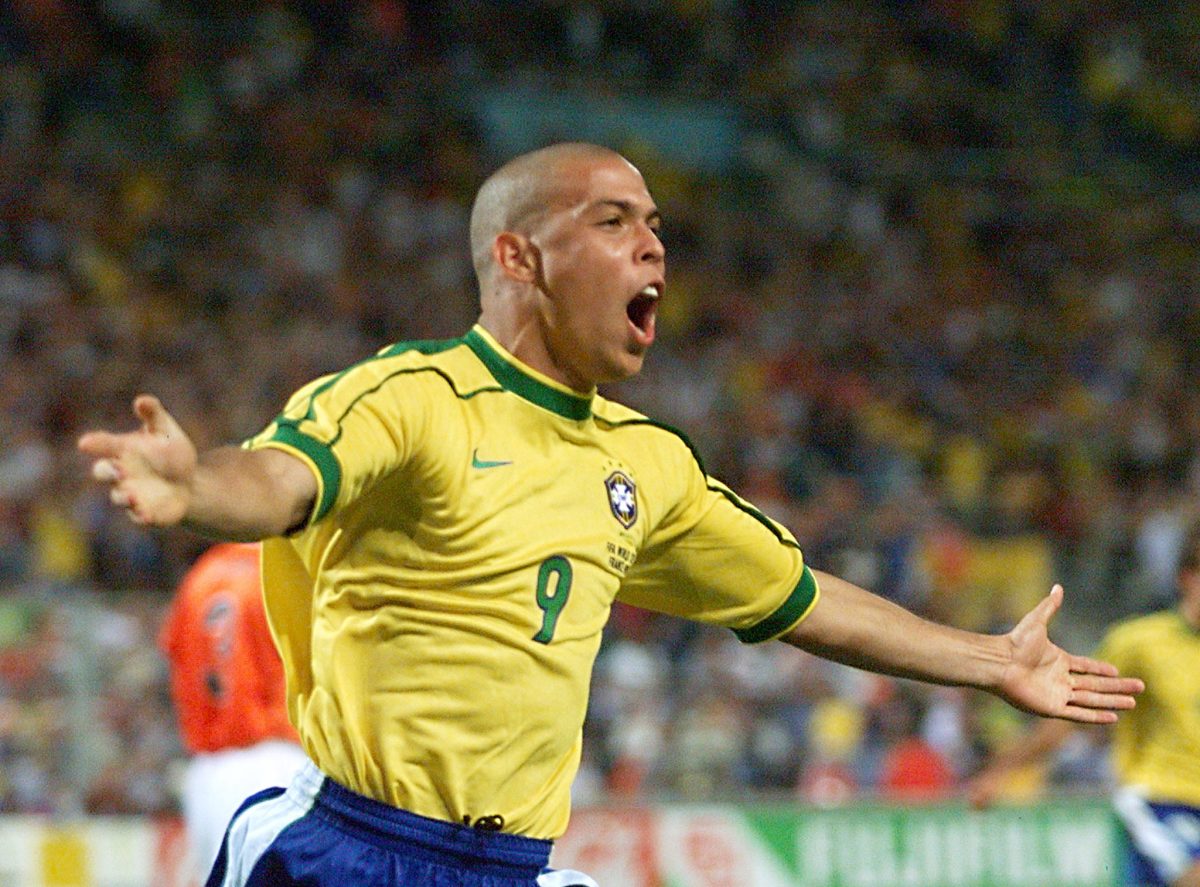
Romário de Souza Faria (born 29 January 1966), known simply as Romário, is a Brazilian politician and former professional footballer. A prolific striker renowned for clinical finishing, he is considered one of the greatest players of all time. He scored more than 700 goals for club and country and became one of only five players to score 100 goals for three different clubs.
“A compact poacher whose first touch and near-post movement were relentlessly efficient.”
Brazilian playmaker and 1999 Ballon d'Or winner; key member of Brazil's 2002 World Cup-winning attack.
“A bow-legged left-footed conjuror whose tricks and bicycle kicks lit up grounds across continents.”
Head-to-head stats
Career goals by season
Representative career seasons — goals per season for each player across their documented clubs.
Attribute radar
Attribute ratings are peak-era, 0–100. Different positions naturally skew the profile.
Attribute comparison
Trophy breakdown
- 1× FIFA World Cup (1994)
- 1× FIFA World Cup (2002)
- 1× Copa América (1999)
- 1× FIFA Confederations Cup (1997)
- 2× La Liga (1998, 1999)
- 1× UEFA Champions League (2003)
- 3× Greek Super League (2005, 2006, 2007)
Trophy distribution
Career milestones
- 1986 Established himself at PSV Eindhoven
- 1990 Reached his defining peak
- 1994 Delivered a landmark season
- 2009 Retired from professional football
- 1991 Santa Cruz debut before moves to Mogi Mirim and Corinthians
- 1996 Moved to Europe with Deportivo La Coruña
- 1997 Signed for Barcelona
- 1999 Ballon d'Or winner
- 2002 World Cup winner, scored a bicycle kick against Belgium
- 2003 Joined AC Milan and won the Champions League
- 2010 Finished his career with Uzbek side Bunyodkor
The verdict
The numbers give Rivaldo the lead — a narrow margin, courtesy of a stronger all-round attribute profile.
Rivaldo edges it (a narrow margin)