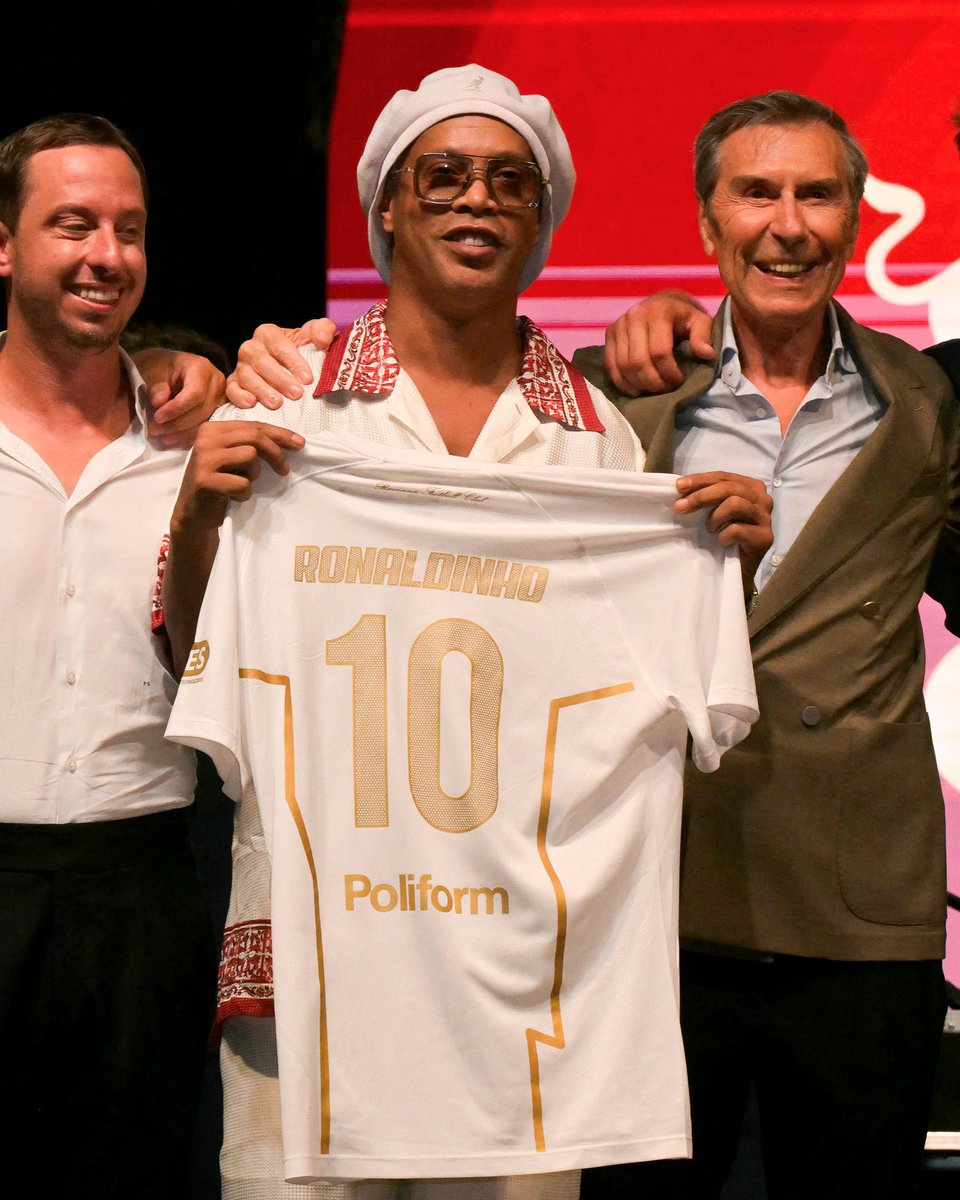

Ronaldinho vs Dunga: Stats Compared
Attacking Midfielder / Winger, Brazil (born 1980, retired 2015) · Defensive Midfielder, Brazil (born 1963, retired 1998)
Few debates split football fans quite like Ronaldinho versus Dunga. Greatness, in the end, is about who you inspired, and both left a footprint far beyond their own careers. Career output puts Ronaldinho at 282 goals in 685 games, with Dunga at 60 in 687. Because assists were not systematically tracked for much of their time, that side of the comparison rests on the footage that survives. Trophy counts give Ronaldinho 8 and Dunga 8, with 1× FIFA World Cup (2002) and 1× FIFA World Cup (1994) the standout honours respectively. History will file Ronaldinho under silky greatness and Dunga under dictatorial greatness — different shelves, same temple. Their routes to the top were distinct: Ronaldinho built his reputation across Grêmio, PSG, Barcelona, AC Milan, Flamengo, Atlético Mineiro, Querétaro, Fluminense, peaking around 2006, while Dunga reached his defining level around 1994 after spells with Vasco da Gama, Fiorentina, Stuttgart, Júbilo Iwata. Picking between them says as much about the picker as the players.
163 words · comparison angle: legacy
Player profiles
Brazilian magician and 2005 Ballon d'Or winner who led Barcelona to their second Champions League title in 2006.
“A mercurial, samba-flaired playmaker whose tricks, flicks and elastico delighted crowds and baffled defenders.”
Carlos Caetano Bledorn Verri (born 31 October 1963), commonly known as Dunga, is a Brazilian football manager and former professional player. Considered one of the greatest defensive midfielders of all time, as a player, he was known for his technique, athleticism, passing range, solid tackles and first touch. Under the captaincy Dunga took from Raí, Brazil won the 1994 FIFA World Cup and became runners-up of the following edition.
“A disciplined captain whose tackling, structure and fierce standards gave Brazil balance.”
Head-to-head stats
Career goals by season
Representative career seasons — goals per season for each player across their documented clubs.
Attribute radar
Attribute ratings are peak-era, 0–100. Different positions naturally skew the profile.
Attribute comparison
Trophy breakdown
- 1× FIFA World Cup (2002)
- 2× Copa América (1999, 2005)
- 1× FIFA Confederations Cup (2005)
- 1× UEFA Champions League (2006)
- 2× La Liga (2005, 2006)
- 1× Serie A (2011)
- 1× FIFA World Cup (1994)
Trophy distribution
Career milestones
- 1998 Professional debut for Grêmio
- 2001 Moved to PSG
- 2002 World Cup winner, scored a famous lob against England
- 2003 Signed for Barcelona
- 2005 Ballon d'Or winner
- 2006 Champions League winner with Barcelona
- 2011 Won the Campeonato Brasileiro with Flamengo
- 1986 Established himself at Vasco da Gama
- 1990 Reached his defining peak
- 1994 Delivered a landmark season
- 1998 Retired from professional football
The verdict
On balance Ronaldinho edges the comparison. The margin is a clear margin, decided mostly by a sharper goalscoring record.
Ronaldinho edges it (a clear margin)