
Ronaldo Nazário vs Gerd Müller: Stats Compared
Striker, Brazil (born 1976, retired 2011) · Striker, Germany (born 1945, retired 1982)
When Ronaldo Nazário and Gerd Müller are mentioned in the same breath, opinions rarely stay quiet. Separated by their years at the top, each defined the football of their own generation. On production alone, Ronaldo Nazário posted 414 goals across 618 appearances while Gerd Müller managed 735 across 793. Reliable assist tallies simply do not exist for large stretches of their careers, leaving creativity to the eye rather than the spreadsheet. In major honours Ronaldo Nazário collected 8 — headlined by 2× FIFA World Cup (1994, 2002) — whereas Gerd Müller amassed 9, led by 1× FIFA World Cup (1974). Across the turn of the millennium and the 1970s respectively, their ruthless and flair-driven styles captured the spirit of very different footballing times. The wider career context matters too: Ronaldo Nazário peaked around 2002 after representing Cruzeiro, PSV, Barcelona, Inter Milan, Real Madrid, AC Milan, Corinthians, while Gerd Müller's defining level came around 1970 across Bayern Munich, Fort Lauderdale Strikers. Whichever side you land on, both belong in any conversation about the finest of their generation.
176 words · comparison angle: era
Player profiles
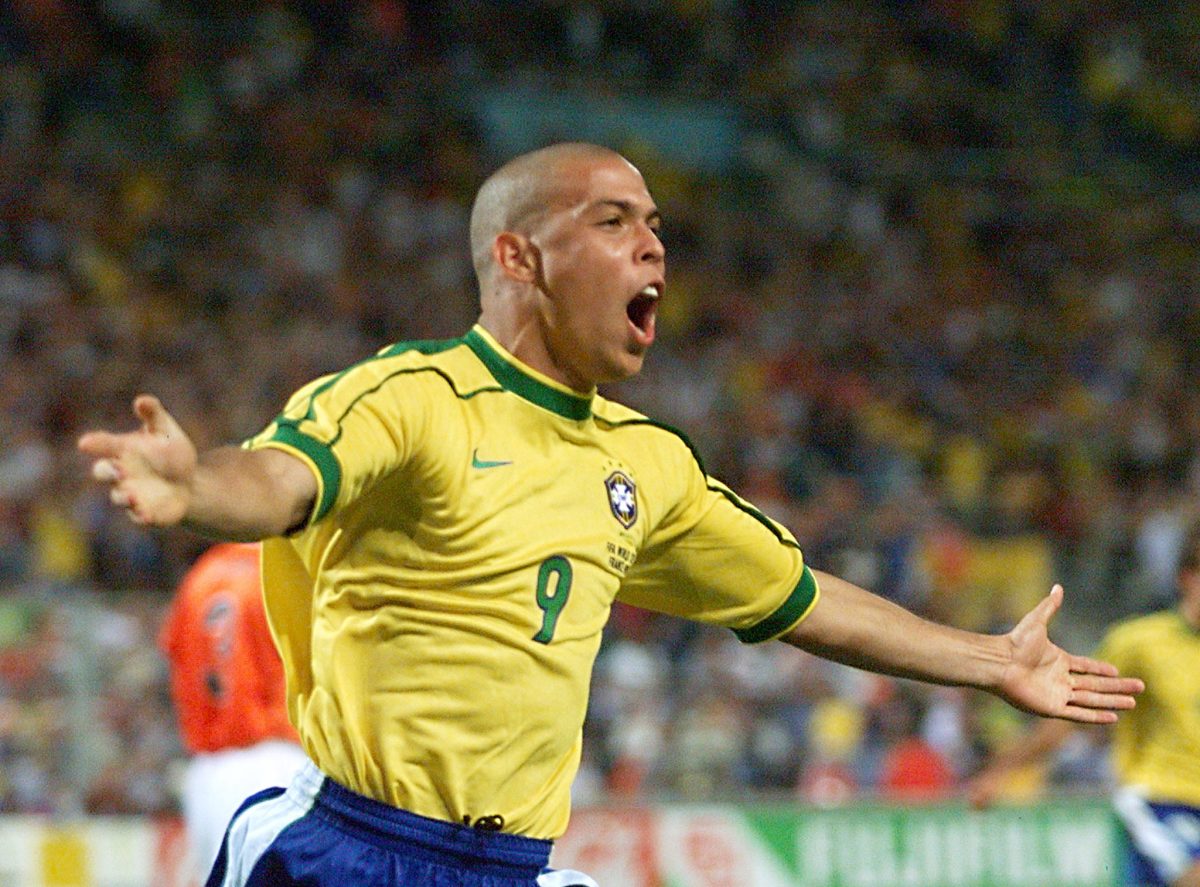
Brazilian striker who won two World Cups and is widely considered one of the most complete forwards in history; back-to-back Ballon d'Or winner in 1997 and 2002.
“An explosive, two-footed striker blending raw pace, finishing and clinical dribbling at full speed.”
Gerhard Müller was a German professional footballer. A prolific striker, especially in and around the six-yard box, he is widely regarded as one of the greatest goalscorers and players in the history of the sport. With success at both the club level and the international level, he is one of eleven players to have won the FIFA World Cup, the UEFA Champions League and the Ballon d'Or.
“A penalty-box master whose movement and finishing turned half-chances into goals.”
Head-to-head stats
Career goals by season
Representative career seasons — goals per season for each player across their documented clubs.
Attribute radar
Attribute ratings are peak-era, 0–100. Different positions naturally skew the profile.
Attribute comparison
Trophy breakdown
- 2× FIFA World Cup (1994, 2002)
- 2× Copa América (1997, 1999)
- 1× FIFA Confederations Cup (1997)
- 1× UEFA Cup (1998)
- 1× UEFA Cup Winners' Cup (1997)
- 1× La Liga (2003)
- 1× FIFA World Cup (1974)
Trophy distribution
Career milestones
- 1993 Professional debut for Cruzeiro aged 16
- 1994 Joined PSV and was a World Cup squad member
- 1996 World-record transfer to Barcelona
- 1997 World-record transfer to Inter Milan
- 2002 Top scorer and World Cup winner in Japan/Korea
- 2003 Joined Real Madrid's Galácticos
- 2011 Retired at Corinthians
- 1962 Established himself at Bayern Munich
- 1966 Reached his defining peak
- 1970 Delivered a landmark season
- 1982 Retired from professional football
The verdict
Weighing production, silverware and profile, the two finish within a whisker of each other. Call it a respectful draw — greatness of this calibre resists a single winner.
Too close to call — a respectful draw