Ronaldo Nazário vs Alfredo Di Stéfano: Stats Compared
Striker, Brazil (born 1976, retired 2011) · Forward, Argentina (born 1926, retired 1966)
Ronaldo Nazário and Alfredo Di Stéfano represent two answers to the same question: how do you define a great? It is in how they played, rather than what they won, that the comparison gets interesting. On production alone, Ronaldo Nazário posted 414 goals across 618 appearances while Alfredo Di Stéfano managed 511 across 698. Reliable assist tallies simply do not exist for large stretches of their careers, leaving creativity to the eye rather than the spreadsheet. Trophy counts give Ronaldo Nazário 8 and Alfredo Di Stéfano 15, with 2× FIFA World Cup (1994, 2002) and 5× European Cup (1956, 1957, 1958, 1959, 1960) the standout honours respectively. Ronaldo Nazário played with a predatory that made him unmistakable; Alfredo Di Stéfano brought a mercurial that was equally his own. Context beyond the headline totals is important: Ronaldo Nazário's landmark level arrived around 2002 with a career spanning Cruzeiro, PSV, Barcelona, Inter Milan, Real Madrid, AC Milan, Corinthians; Alfredo Di Stéfano's came around 1958 across River Plate, Millonarios, Real Madrid, Espanyol. Picking between them says as much about the picker as the players.
181 words · comparison angle: style
Player profiles
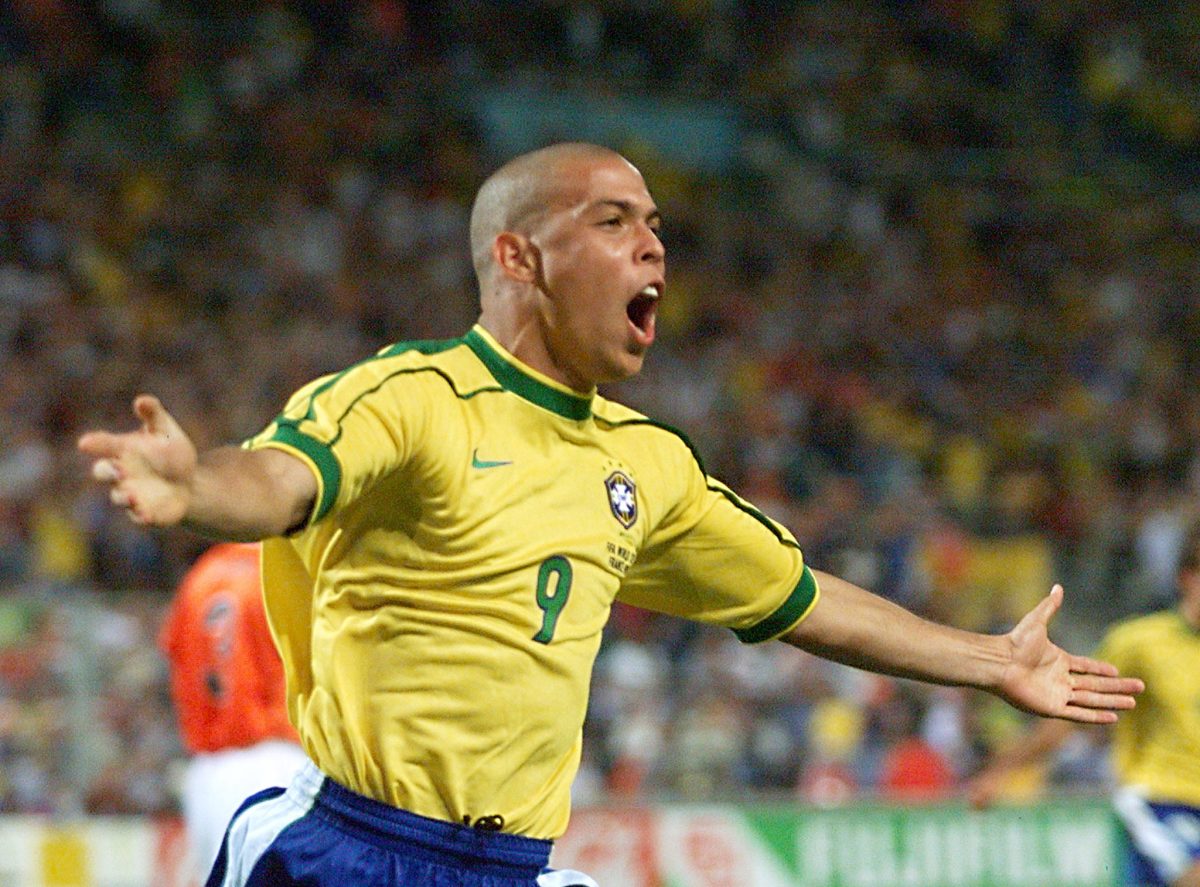
Brazilian striker who won two World Cups and is widely considered one of the most complete forwards in history; back-to-back Ballon d'Or winner in 1997 and 2002.
“An explosive, two-footed striker blending raw pace, finishing and clinical dribbling at full speed.”
Real Madrid legend and key figure of their five-consecutive European Cups; defined the modern total footballer role.
“An omnipresent forward who dropped deep to construct attacks before arriving in the box to finish them.”
Head-to-head stats
Career goals by season
Representative career seasons — goals per season for each player across their documented clubs.
Attribute radar
Attribute ratings are peak-era, 0–100. Different positions naturally skew the profile.
Attribute comparison
Trophy breakdown
- 2× FIFA World Cup (1994, 2002)
- 2× Copa América (1997, 1999)
- 1× FIFA Confederations Cup (1997)
- 1× UEFA Cup (1998)
- 1× UEFA Cup Winners' Cup (1997)
- 1× La Liga (2003)
- 5× European Cup (1956, 1957, 1958, 1959, 1960)
- 1× Intercontinental Cup (1960)
- 8× La Liga
- 1× Copa América (1947)
Trophy distribution
Career milestones
- 1993 Professional debut for Cruzeiro aged 16
- 1994 Joined PSV and was a World Cup squad member
- 1996 World-record transfer to Barcelona
- 1997 World-record transfer to Inter Milan
- 2002 Top scorer and World Cup winner in Japan/Korea
- 2003 Joined Real Madrid's Galácticos
- 2011 Retired at Corinthians
- 1945 River Plate debut
- 1947 Copa América winner with Argentina
- 1949 Moved to Millonarios in Colombia
- 1953 Signed for Real Madrid after a contested transfer
- 1956 First of five consecutive European Cups
- 1959 Won the first Ballon d'Or (Super Ballon d'Or) honoured later
- 1964 Left Real Madrid for Espanyol
The verdict
Taking goals, assists, silverware and overall profile together, Alfredo Di Stéfano takes it by a clear margin.
Alfredo Di Stéfano edges it (a clear margin)