Ronaldo Nazário vs Toni Kroos: Stats Compared
Striker, Brazil (born 1976, retired 2011) · Central Midfielder, Germany (born 1990, retired 2024)
Ronaldo Nazário against Toni Kroos is the kind of comparison that fuels pub arguments for hours. Both built reputations on finding the back of the net, but they did it in markedly different ways. Ronaldo Nazário finishes with 414 career goals from 618 games — a 0.67 strike rate — against Toni Kroos's 60 from 700 at 0.09 per match. Assists were not reliably tracked for much of their careers, which makes the playmaking comparison an imperfect one; where records exist, Ronaldo Nazário is credited with 0 and Toni Kroos with 150. The honours ledger favours Ronaldo Nazário with 8 major trophies (2× FIFA World Cup (1994, 2002)) against Toni Kroos's 12 (1× FIFA World Cup (2014)). Ronaldo Nazário scored with a explosive that defined his era, while Toni Kroos's finishing carried a intelligent all of its own. The wider career context matters too: Ronaldo Nazário peaked around 2002 after representing Cruzeiro, PSV, Barcelona, Inter Milan, Real Madrid, AC Milan, Corinthians, while Toni Kroos's defining level came around 2018 across Bayern Munich, Real Madrid. Few pairings invite such entrenched disagreement, and fewer still deserve it this much.
187 words · comparison angle: goalscoring
Player profiles
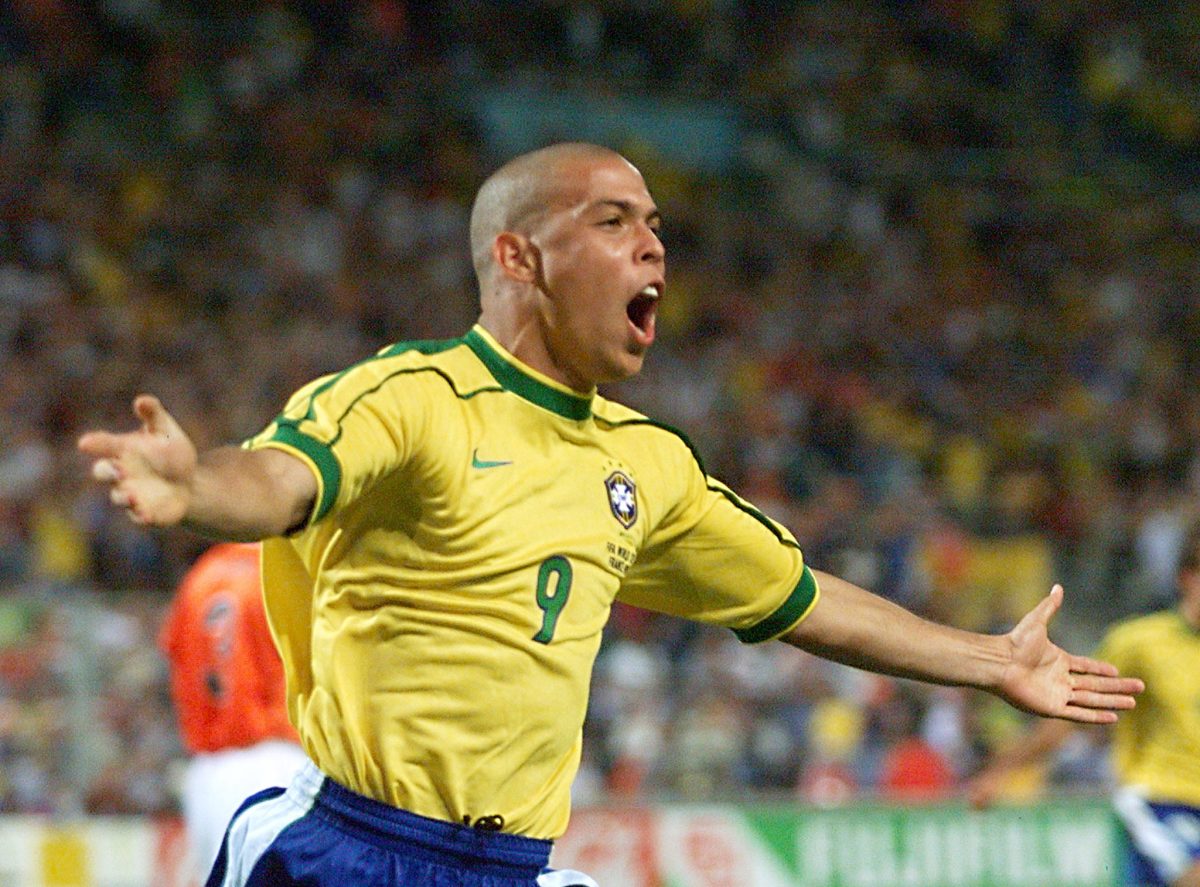
Brazilian striker who won two World Cups and is widely considered one of the most complete forwards in history; back-to-back Ballon d'Or winner in 1997 and 2002.
“An explosive, two-footed striker blending raw pace, finishing and clinical dribbling at full speed.”
A metronomic, World Cup-winning German midfielder, Kroos completed more Champions League passes than almost anyone in history across a record six European Cup triumphs.
“An unhurried, exceptionally precise deep-lying playmaker whose passing range dictated the tempo of nearly every team he played for.”
Head-to-head stats
Career goals by season
Representative career seasons — goals per season for each player across their documented clubs.
Attribute radar
Attribute ratings are peak-era, 0–100. Different positions naturally skew the profile.
Attribute comparison
Trophy breakdown
- 2× FIFA World Cup (1994, 2002)
- 2× Copa América (1997, 1999)
- 1× FIFA Confederations Cup (1997)
- 1× UEFA Cup (1998)
- 1× UEFA Cup Winners' Cup (1997)
- 1× La Liga (2003)
- 1× FIFA World Cup (2014)
- 6× UEFA Champions League (2014, 2016, 2017, 2018, 2022, 2024)
- 1× Bundesliga (2013)
- 4× La Liga (2017, 2020, 2022, 2024)
Trophy distribution
Career milestones
- 1993 Professional debut for Cruzeiro aged 16
- 1994 Joined PSV and was a World Cup squad member
- 1996 World-record transfer to Barcelona
- 1997 World-record transfer to Inter Milan
- 2002 Top scorer and World Cup winner in Japan/Korea
- 2003 Joined Real Madrid's Galácticos
- 2011 Retired at Corinthians
- 2007 Professional debut for Bayern Munich
- 2014 Won FIFA World Cup with Bayern Munich
- 2017 Won La Liga with Real Madrid
- 2018 Reached the peak of his powers at Real Madrid
- 2024 Retired after a final spell at Real Madrid
- Finished his career with 60 goals in 700 appearances and 12 major honours. Finished his career with 60 goals in 700 appearances and 12 major honours.
The verdict
Reasonable people will disagree, but Ronaldo Nazário wins out by a clear margin on the weight of a sharper goalscoring record.
Ronaldo Nazário edges it (a clear margin)