
Ronaldo Nazário vs Luis Enrique: Stats Compared
Striker, Brazil (born 1976, retired 2011) · Attacking Midfielder, Spain (born 1970, retired 2004)
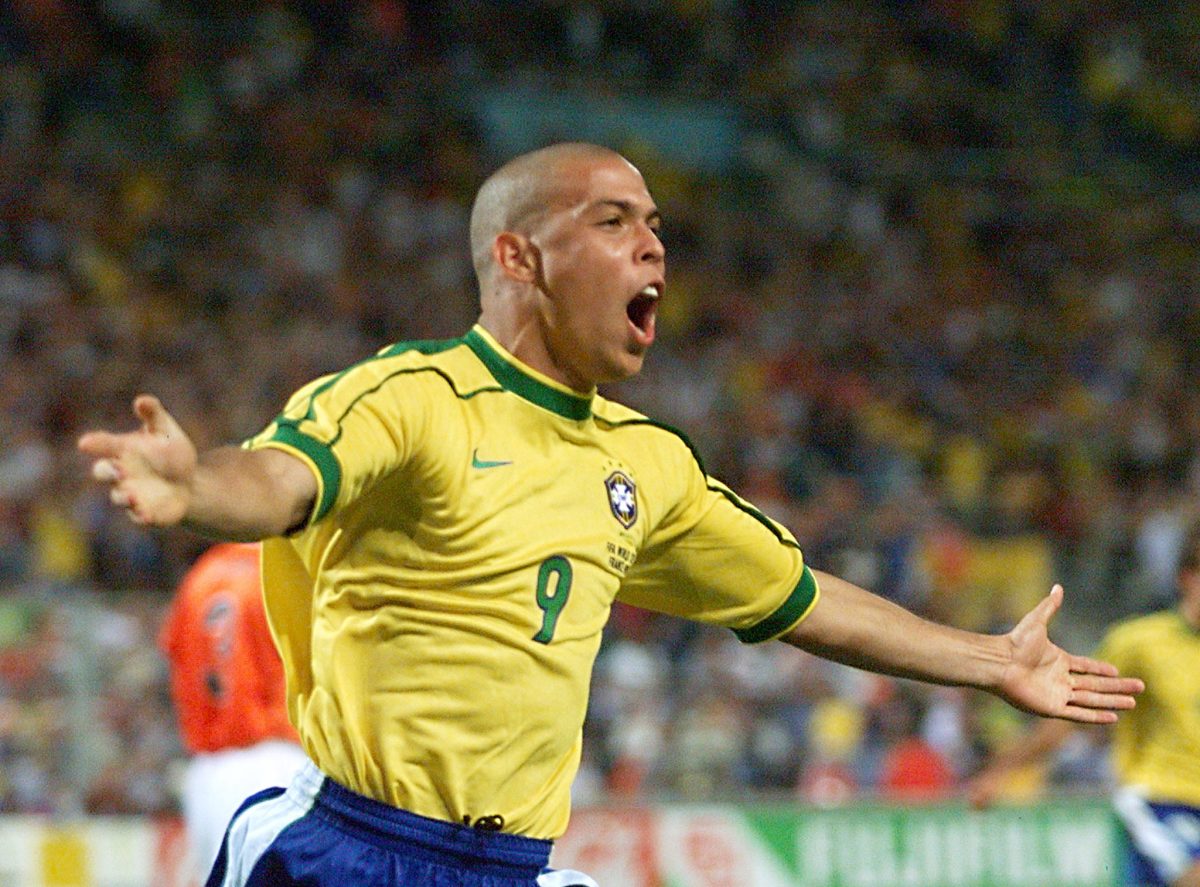
The Ronaldo Nazário–Luis Enrique comparison is one of those fixtures of footballing folklore. Style separates them as much as statistics: two players, two unmistakable signatures. The raw numbers read 414 goals in 618 outings for Ronaldo Nazário (0.67/game), versus 158 in 556 for Luis Enrique (0.28/game). Because assists were not systematically tracked for much of their time, that side of the comparison rests on the footage that survives. Trophy counts give Ronaldo Nazário 8 and Luis Enrique 8, with 2× FIFA World Cup (1994, 2002) and 2× La Liga (1995, 1999) the standout honours respectively. Stylistically Ronaldo Nazário was predatory where Luis Enrique was incisive — two vocabularies of the same sport. Context beyond the headline totals is important: Ronaldo Nazário's landmark level arrived around 2002 with a career spanning Cruzeiro, PSV, Barcelona, Inter Milan, Real Madrid, AC Milan, Corinthians; Luis Enrique's came around 1999 across Sporting Gijón, Real Madrid, Barcelona. Picking between them says as much about the picker as the players.
163 words · comparison angle: style
Player profiles
Brazilian striker who won two World Cups and is widely considered one of the most complete forwards in history; back-to-back Ballon d'Or winner in 1997 and 2002.
“An explosive, two-footed striker blending raw pace, finishing and clinical dribbling at full speed.”
Luis Enrique Martínez García is a Spanish football manager and former player who is currently the head coach of Ligue 1 club Paris Saint-Germain. A versatile player with good technique, he was capable of playing in several positions but was usually deployed as a midfielder or forward, and was also noted for his temperament and stamina. Starting in 1991 and ending in 2004, he began his career at Sporting de Gijón and later represented both Real Madrid and Barcelona with both individual and team success, taking part in 558 official games and scoring 144 goals.
“A versatile, hard-running midfielder who arrived late and contributed everywhere.”
Head-to-head stats
Career goals by season
Representative career seasons — goals per season for each player across their documented clubs.
Attribute radar
Attribute ratings are peak-era, 0–100. Different positions naturally skew the profile.
Attribute comparison
Trophy breakdown
- 2× FIFA World Cup (1994, 2002)
- 2× Copa América (1997, 1999)
- 1× FIFA Confederations Cup (1997)
- 1× UEFA Cup (1998)
- 1× UEFA Cup Winners' Cup (1997)
- 1× La Liga (2003)
- 2× La Liga (1995, 1999)
Trophy distribution
Career milestones
- 1993 Professional debut for Cruzeiro aged 16
- 1994 Joined PSV and was a World Cup squad member
- 1996 World-record transfer to Barcelona
- 1997 World-record transfer to Inter Milan
- 2002 Top scorer and World Cup winner in Japan/Korea
- 2003 Joined Real Madrid's Galácticos
- 2011 Retired at Corinthians
- 1991 Established himself at Sporting Gijón
- 1995 Reached his defining peak
- 1999 Delivered a landmark season
- 2004 Retired from professional football
The verdict
If forced to pick, Ronaldo Nazário is the choice: a clear margin, with a sharper goalscoring record the deciding factor.
Ronaldo Nazário edges it (a clear margin)